

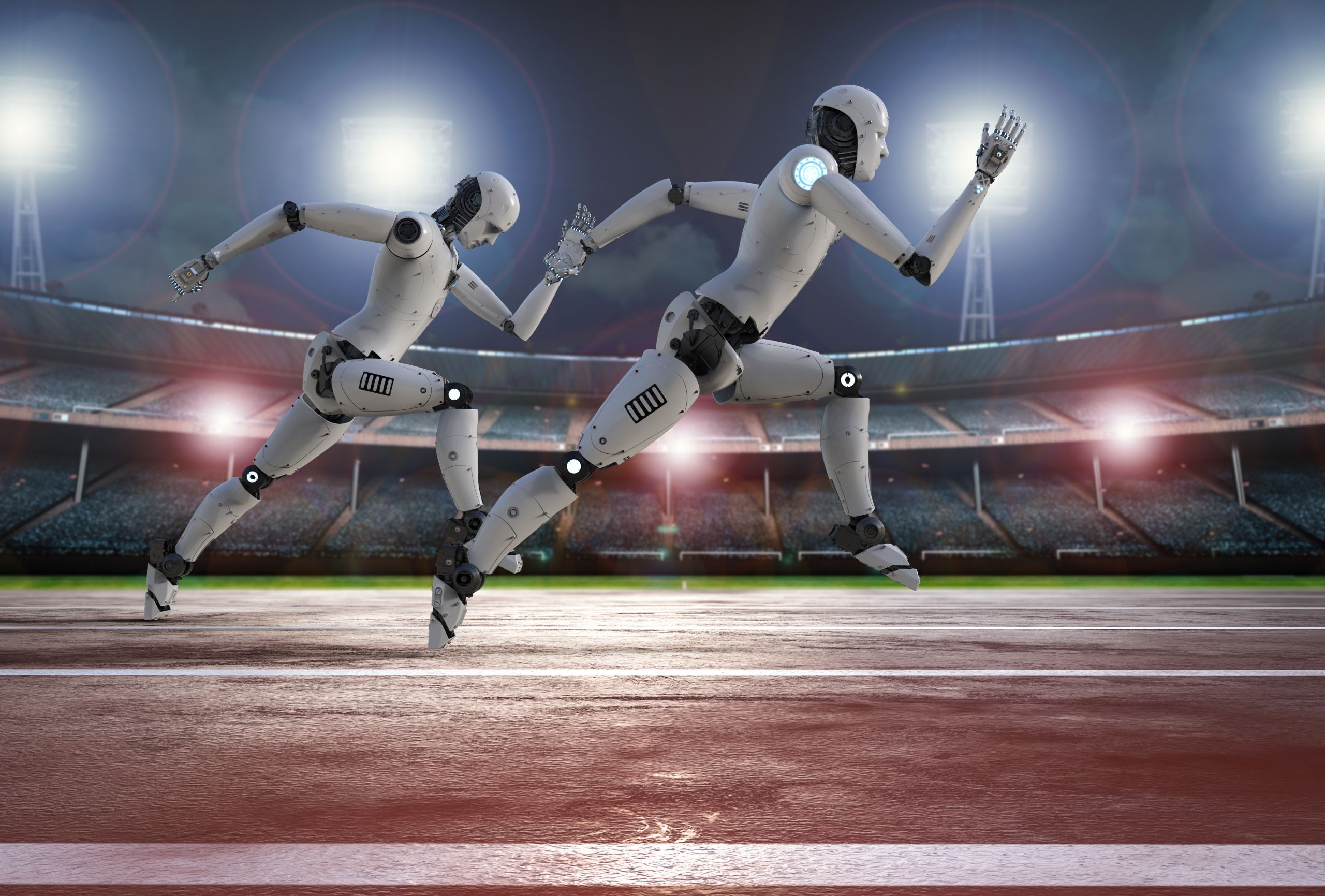
AI is making creative production faster. That could make creative judgement more valuable, not less.
AI is going to change creative in sport. The question is not really whether it will; it is what we choose to do with it.
The history of creative production suggests that new technology rarely arrives without a degree of panic. Over the last 40 years, the industry has repeatedly been told that the latest development will change everything. In practice, the industry has adapted.
In the 1980s, paste-up artists, Letraset and typesetting were being replaced by the Apple Mac. In the 1990s, film, matchprints and physical delivery gave way to digital files and ISDN. In the 2000s, email and the internet changed the way creative work was produced, shared and distributed. Each time, the tools changed. The need for creative thinking did not.
AI is the latest step in that process.
In fact, AI has already been part of creative software for some time. It is helping streamline repetitive tasks, accelerate workflows and improve what can be achieved within a given timeframe. As those capabilities develop, the production side of creative work will inevitably become quicker and more accessible.
That is a benefit.
The danger is assuming that faster production automatically means better creative.
It is tempting to see AI as a fix-all solution: give it a brief, generate the assets and remove the cost of the people who used to make them.
But creative work has never simply been about producing an image.
It is about knowing the brand. It is about understanding typography, formats, production requirements, screen and print specifications, workflows and the practical realities of getting an idea into the world. It is about knowing whether an idea is right for the audience, whether it can work across channels and whether it still feels like the brand when it is being used at scale.
Those things require judgement.
For sport, that judgement matters even more. Sporting brands operate across an unusually broad mix of environments: matchdays, social, digital, retail, sponsorship, presentations, print and physical spaces. A creative idea may need to behave very differently in each of them while still feeling like the same brand.
AI can help us get there faster. It can help with exploration, production and workflow. But it does not remove the need for someone to decide what should be made in the first place, what should be rejected and what needs to be protected.
That is where we see the role of the designer evolving.
The designer becomes less about simply producing an asset and more about being a guardian of the creative system around it. The technology will continue to change, just as it has before. The value of experience will change with it.
AI may make creative production easier. It does not make creative judgement unnecessary.
Talk to us about building a creative system that uses AI without losing brand judgement.